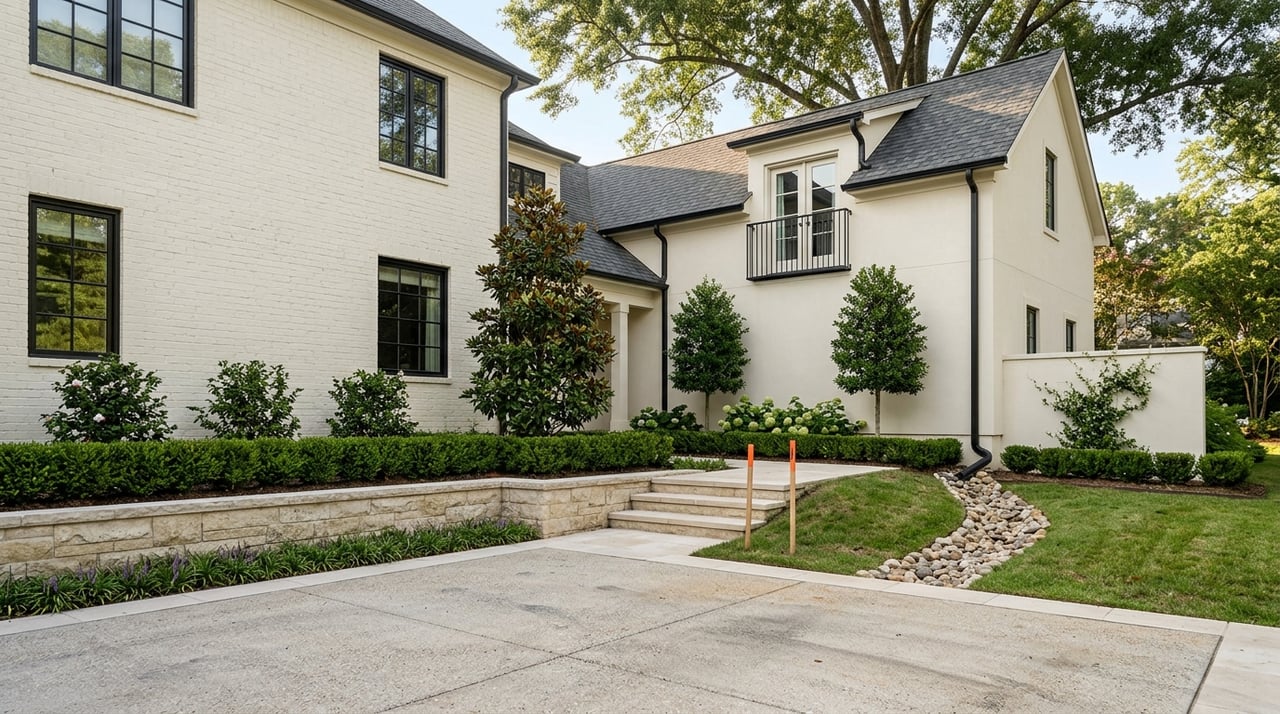
Trying to pin down lot value in Chastain Park with one simple number usually leads to the wrong conclusion. In this part of Atlanta, two homes a short drive apart can sit on very different parcels, face different zoning rules, and offer very different building potential. If you are weighing a teardown, a custom build, or a move into newer construction, understanding those differences can help you make a smarter decision. Let’s dive in.
Why lot value varies in Chastain Park
Chastain Park is not a one-size-fits-all neighborhood. The area spans Atlanta and Sandy Springs, and the namesake park itself covers 268 acres. That broader footprint matters because lot value can change based on jurisdiction, zoning, tree rules, and the physical traits of the parcel.
In the City of Atlanta, zoning and building codes help control how a lot can be used. Those rules affect setbacks, building size, density, height, and parking. Fulton County parcel records and assessment data also shape how owners and buyers understand a property’s land value and improvement value.
What lot value means here
In Chastain Park, lot value is really about what the parcel allows and how easily it can support your plans. A larger lot is not always more valuable if steep grades, tree constraints, or setbacks limit what you can build. On the other hand, a smaller lot in a newer enclave may still carry strong value if the site is straightforward and the lifestyle appeal is high.
Atlanta’s residential zoning districts show why the area feels so varied. The city’s zoning ranges from R-1, which requires a 2-acre minimum lot size, down to R-5, which allows lots as small as 0.17 acres. That helps explain why you see both estate-scale properties and smaller infill homes in the Chastain Park area.
Some recent Chastain Park Drive properties are also recorded as MR-2-C conditional zoning. That detail suggests some of the newer housing product is tied to planned enclave-style development rather than the classic large-lot estate pattern many buyers associate with Chastain.
New builds often follow two paths
If you are shopping new construction in Chastain Park, you will usually see one of two broad categories. The first is enclave-style living on smaller lots. The second is a custom or rebuilt home on a larger parcel.
Both can be attractive, but they serve different goals. One tends to prioritize convenience and lower exterior upkeep. The other often appeals to buyers who want more yard space, privacy, or room for future outdoor features.
Enclave new builds on smaller lots
Recent listings and sales on Chastain Park Drive show a clear cluster of newer single-family homes. Addresses including 201, 220, 230, 240, 251, 270, 280, and 290 Chastain Park Dr NE sit on lots ranging from about 5,009 to 8,146 square feet. That group averages about 6,953 square feet, or roughly 0.16 acres.
Those homes were largely built between 2017 and 2020. Reported 2025 sales in that cluster ranged from $1.65 million to $1.93 million. That gives buyers a useful benchmark for what newer, smaller-lot product can command in this pocket of Chastain Park.
These homes are often marketed around low-maintenance living. Public listing remarks for some of these properties mention HOA-managed landscaping, shared green space, a central park, and even a dog park within a 32-home enclave. For some buyers, that setup offers a practical alternative to maintaining a much larger lot.
Estate parcels and rebuild opportunities
The other side of the market looks very different. Older or more estate-like properties near Chastain Park sit on much larger sites, including examples at 0.44 acres, 0.69 acres, 0.7 acres, 1.04 acres, and an active land listing at 1.73 acres.
That spread is important because it shows how broad the term lot value can be in this area. One property may be best understood as a compact site for a newer home with managed grounds, while another may support a full custom-home vision with more flexibility for a large yard or pool.
Why topography matters so much
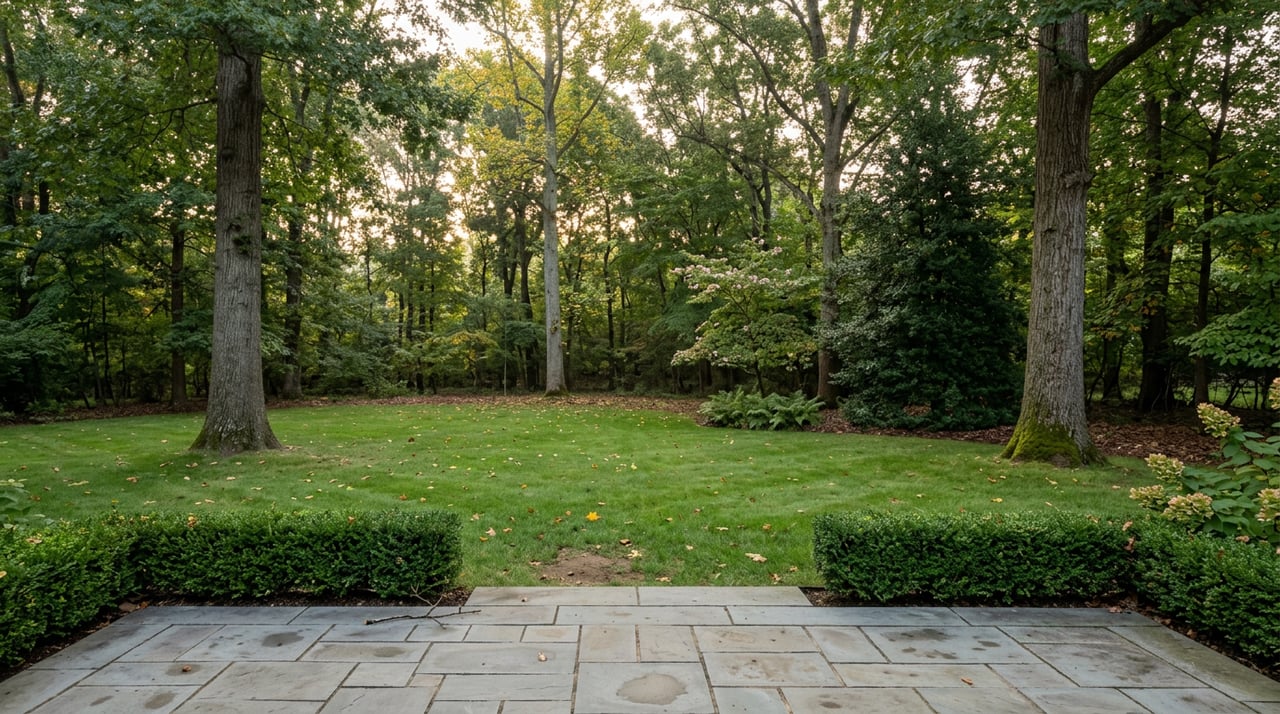
In Chastain Park, the shape and condition of the land can be just as important as lot size. Public listings repeatedly call out level, cleared, or setback-free sites as premium features. That is a strong clue that buyers and builders place real value on land that is easier to use.
For example, one land listing on King Road highlights a flat site with no stream or water setbacks. Other listings mention level terrain that supports efficient construction or outdoor living. In practical terms, a parcel that is easier to build on may offer fewer design compromises and fewer surprises during planning.
A sloped lot or a heavily wooded parcel is not automatically a bad property. But it may involve more grading, drainage work, design adjustments, or tree-related review. In a parcel-by-parcel market like Chastain Park, those factors can meaningfully affect both timeline and budget.
Tree rules and permitting affect buildability
If you are evaluating a lot in the City of Atlanta, permitting and tree rules deserve close attention. The city’s zoning and development office reviews building permits for compliance with rules covering placement, height, size, density, and parking. That means the paper potential of a lot still has to line up with city requirements.
Atlanta’s Arborist Division also enforces the Tree Protection Ordinance on private property. The city rewrote that ordinance in 2025, with the new version taking effect on January 1, 2026. For buyers and owners considering major work, that makes tree impact an important part of early due diligence.
This is one reason lot value in Chastain Park does not come down to acreage alone. Two similarly sized parcels can have very different building outlooks if one is level and lightly wooded while the other has more topographic or tree-related constraints.
Public records help tell the story
Fulton County assessment records offer another useful lens. The county uses a cost approach that combines replacement cost new, depreciation, and land value. The assessor’s office also says staff field-checks properties to verify sales and building-permit status.
For owners, that means a rebuild or major renovation is not just a design upgrade. It can also change how the parcel and the improvements are reflected in public records over time. That is especially relevant in a market where older homes are replaced or substantially updated.
Several examples in the Chastain area show that movement clearly. At 240 Chastain Park Dr, the assessed land plus improvements rose from $436,920 in 2018 to $690,840 in 2025. At 215 Chastain Cmns NW, the figure moved from $480,000 in 2022 to $708,480 in 2024 and 2025, while 4685 Lake Forrest Dr reached $940,000 in 2025 after earlier years in the $500,000 to $900,000 range.
These are assessments, not sale prices. Still, they show how land and structure value can shift sharply after new construction or major improvement work.
How buyers should compare options
If you are deciding between a new build in an enclave and a larger older parcel, start with your lifestyle goals. A smaller-lot new build may offer newer finishes, easier upkeep, and shared maintenance features. A larger parcel may provide more separation from neighbors, more usable yard area, or more flexibility for future changes.
Neither choice is universally better. The right fit depends on how you want to live, how much exterior maintenance you want to handle, and whether long-term expansion potential matters to you.
A practical way to compare is to look at these factors:
- Lot size and shape
- Current zoning classification
- Topography and drainage
- Tree impact and site clearing needs
- Setbacks and build envelope
- Maintenance expectations
- Whether the home is in an HOA-managed enclave
What owners should verify before rebuilding
If you already own in Chastain Park and are considering a rebuild or major expansion, avoid assumptions based on nearby homes alone. Since this is a parcel-by-parcel market, your next step should be to confirm how your specific property is recorded and regulated.
The most practical starting point is to verify the parcel in the City of Atlanta GIS and Fulton County property records. That can help you confirm the lot’s recorded size, current classification, and other baseline details before you move too far into design conversations.
From there, it becomes easier to evaluate whether your property fits better as a renovation candidate, a teardown-and-build opportunity, or a home whose value is strongest as-is. That kind of measured approach is often what protects both time and capital in a high-value market.
The bottom line on Chastain Park lot value
In Chastain Park, lot value is driven less by a neighborhood-wide average and more by the specifics of the parcel. Zoning, topography, tree impact, lot size, and whether a home sits in a managed enclave or on a larger estate parcel all shape how buyers and owners value the property.
That is why the best opportunities often come from careful, property-level analysis rather than broad assumptions. If you are buying, selling, or weighing a rebuild in Chastain Park, clear local guidance can help you see not just what a property is today, but what it can realistically become.
If you want a tailored read on how a specific Chastain Park property may fit your goals, Frank Nelson offers the kind of neighborhood-level perspective that can help you move forward with confidence.
FAQs
What does lot value mean in Chastain Park?
- In Chastain Park, lot value usually reflects more than size alone. It depends on zoning, buildability, topography, tree impact, and whether the parcel is part of a newer enclave or a larger estate-style setting.
Are new builds in Chastain Park usually on small lots?
- Many recent enclave-style new builds on Chastain Park Drive sit on lots of about 5,009 to 8,146 square feet, averaging roughly 6,953 square feet, or about 0.16 acres.
Are there still larger build sites near Chastain Park?
- Yes. Public examples near Chastain Park include parcels around 0.44 acres, 0.69 acres, 0.7 acres, 1.04 acres, and even 1.73 acres, showing that larger estate-style opportunities still exist.
Why does topography matter for a Chastain Park lot?
- Topography affects how easily a site can be developed. Level or cleared lots are often highlighted in listings because they may support more efficient construction and more usable outdoor space.
How do Atlanta tree rules affect a Chastain Park property?
- In the City of Atlanta, the Arborist Division enforces the Tree Protection Ordinance on private property, so tree impact can affect planning, permitting, and the overall feasibility of a new build or major expansion.
Where should you start when evaluating a Chastain Park lot?
- A practical first step is to verify the parcel in City of Atlanta GIS records and Fulton County property records so you can confirm the lot’s recorded details before making assumptions about rebuild or expansion potential.